The Art of Patience
Surprisingly, within the Tri-Cities area, you can find the perfect night sky for stargazing, situated far from the heavy light pollution of the Metro Vancouver Lower Mainland.
The average rate of light pollution in Vancouver is rated as Class 8 or 9 on the Bortle scale, indicating a highly polluted sky. However, in parts of Port Moody or Coquitlam’s Westwood Plateau, the night sky improves significantly to Class 5. This is an excellent rate for suburban observers, offering a darker sky with only a minimal yellow glow on the southern horizon. These ideal conditions make it perfect for all experience levels, serving as an excellent summer family activity or a great way to hang out, chill, and relax with friends.
The benefits of reduced light pollution are significant for anyone wishing to appreciate spectacular celestial events. This region serves as a perfect spot for amateur astronomers and astrophotographers to operate telescopes and dedicated astrophotography cameras during clear nights.
Crucially, you do not need expensive equipment to enjoy this location. It is also an ideal environment for beginners starting out with a simple pair of binoculars, or for anyone who prefers stargazing with the naked eye to take in constellations and passing meteor showers.
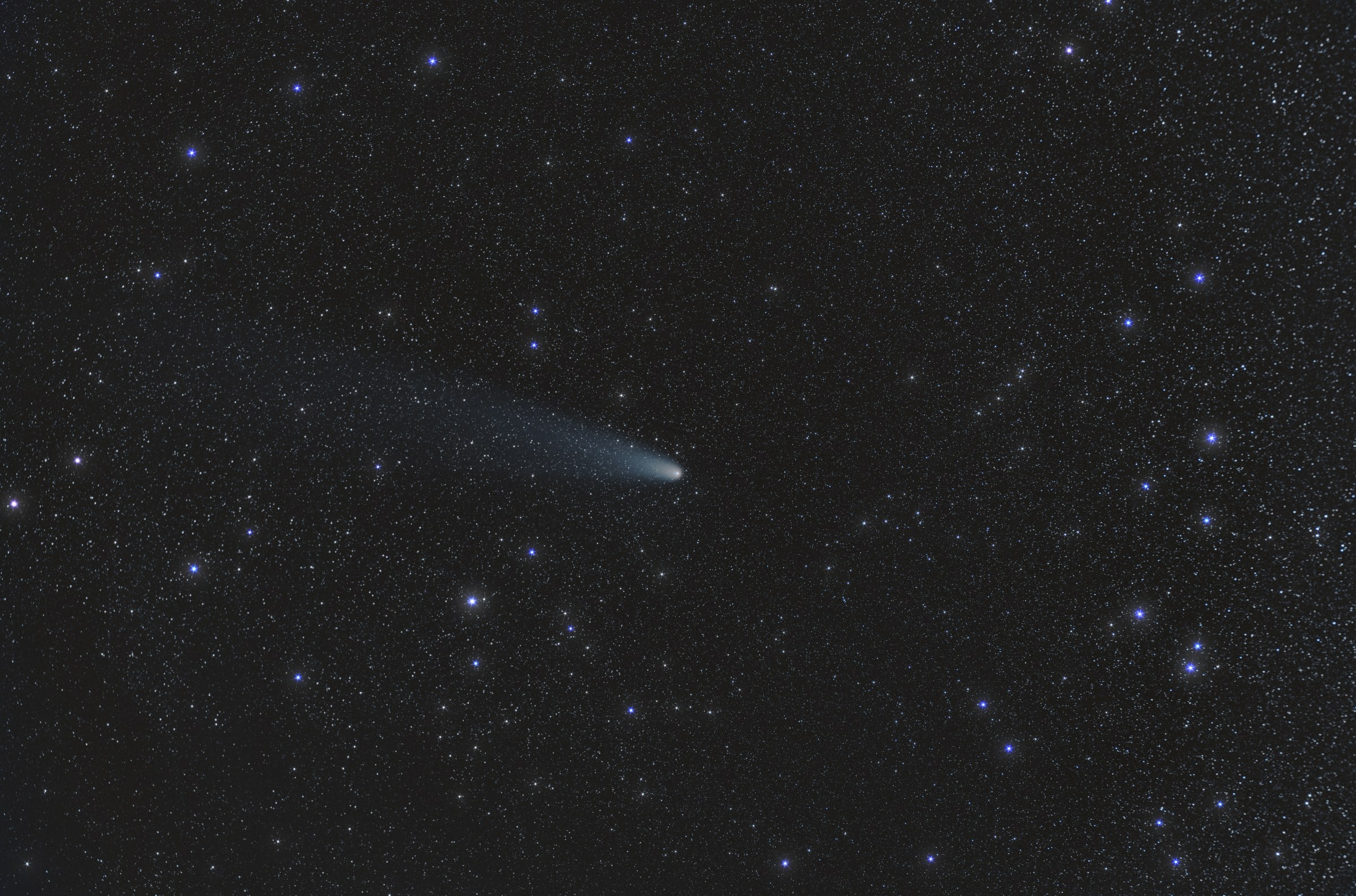
(PIC 01 )
Look up in the sky
Step outside at night, and a vast theater of celestial wonders unfolds before you. Whether you look through a telescope, peer through binoculars, capture the view with a camera, or simply gaze upward with the naked eye, the universe reveals its secrets. You might spot the Milky Way, a glowing silver ribbon of billions of stars draped across the dark canopy. Look closer to find familiar constellations like Ursa Major, bright planets masquerading as stars, and the sudden, breathless flash of a meteor streaking through the atmosphere.
(PIC 02)
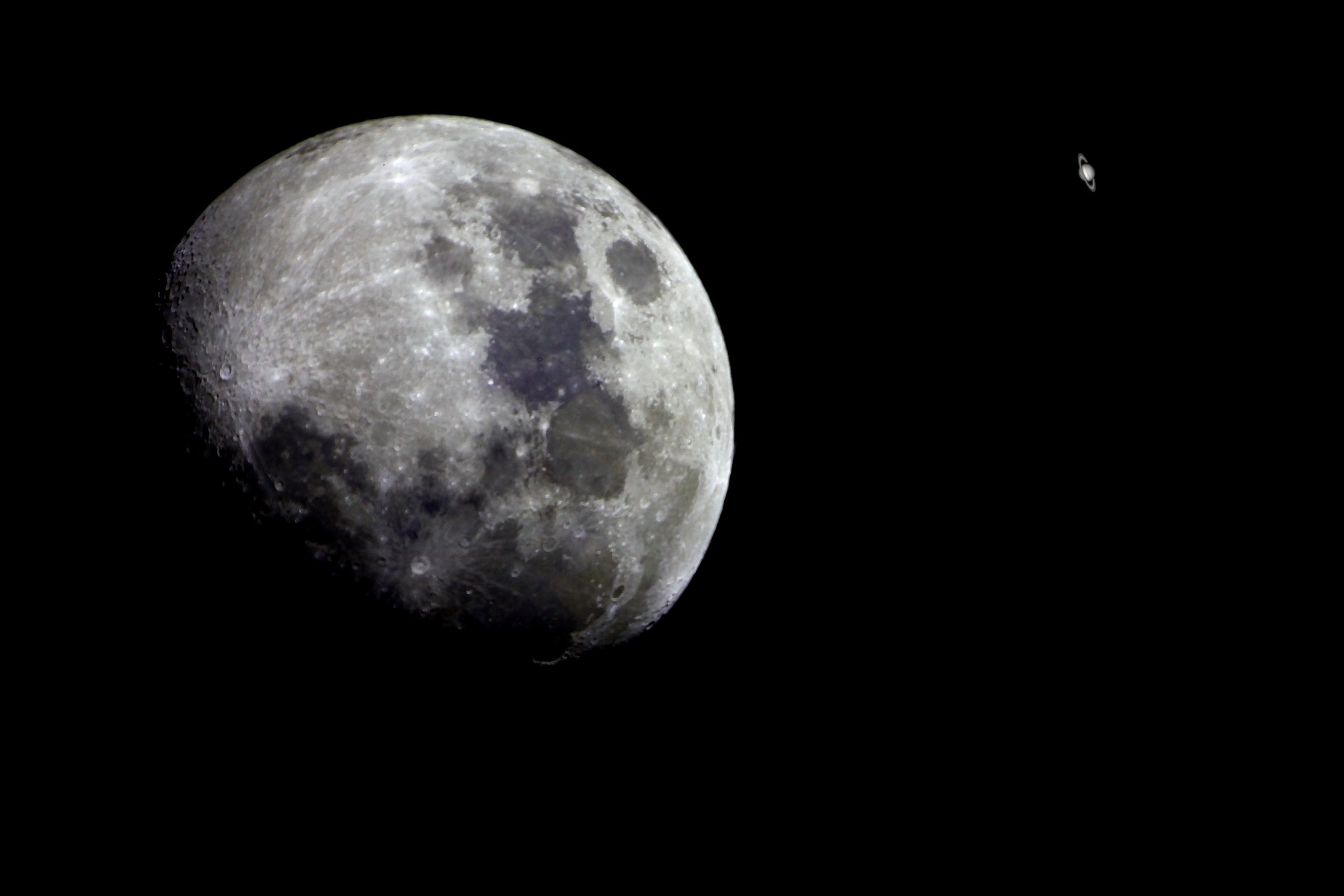
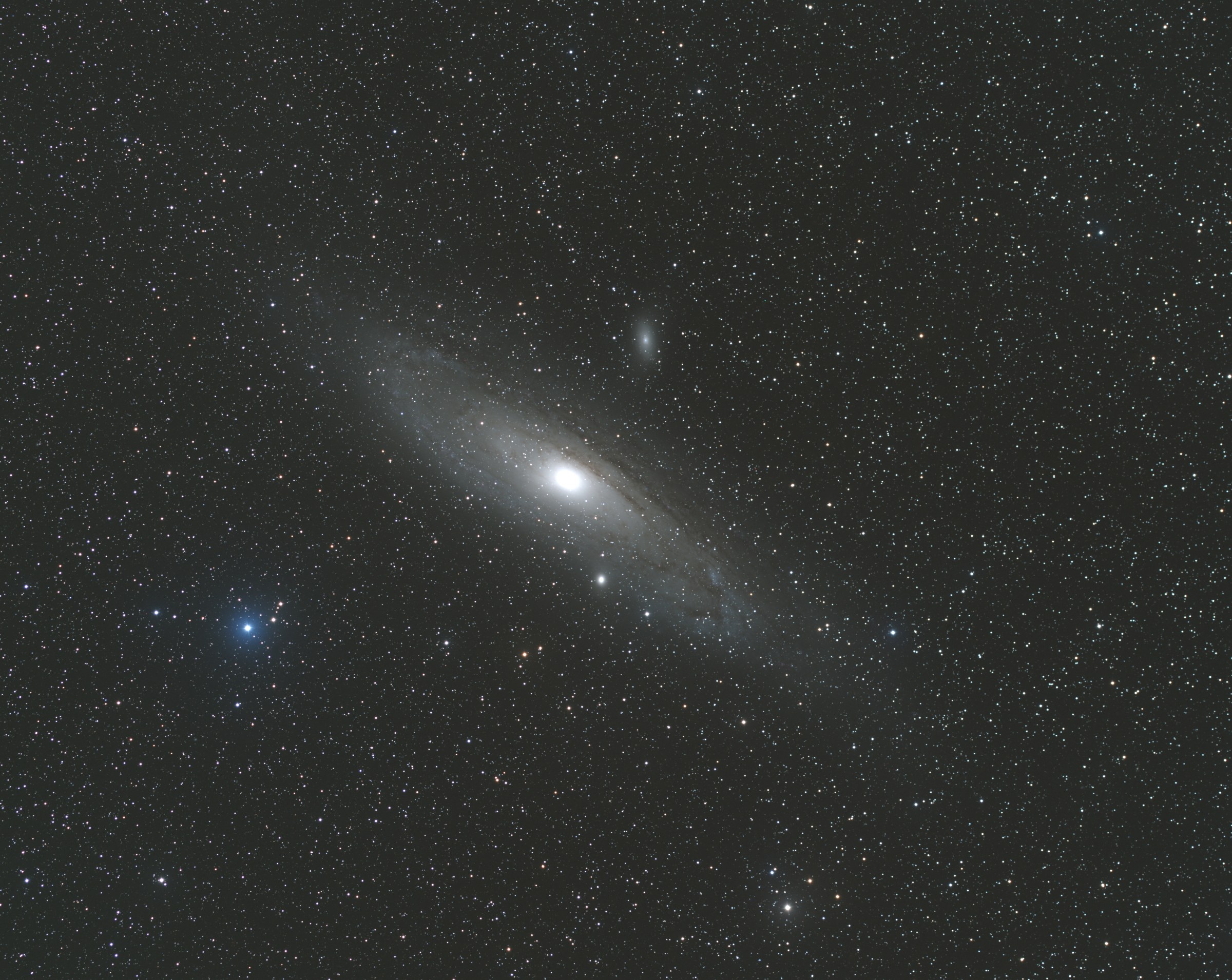
Upgrading to a pair of binoculars or a small backyard telescope opens up a whole new universe. Suddenly, craters on the Moon and planetary features come into sharp focus, revealing Jupiter's four largest moons and the stunning rings of Saturn. On dark, moonless nights, the deep sky comes alive. You can easily spot bright nebulae and dense star clusters like the shimmering Pleiades, or glimpse the Andromeda Galaxy—our closest galactic neighbor—appearing as a faint, mysterious oval in the darkness.
(PIC 03)
When you step up to a sophisticated telescope that can automatically track celestial objects across the sky, stargazing becomes a beautiful exercise in patience and practice. Today's advanced astro-cameras, star trackers, and automated gear mean you can easily set up a rig in your backyard and control the universe while comfortably seated on your couch.
(PIC 04)
Personally, though, I prefer sitting out in the open air right beside my telescope, soaking in the quiet night. It is the perfect excuse to spend more time outdoors—especially during short, precious summer nights when darkness is fleeting at our latitude.
(PIC 05)
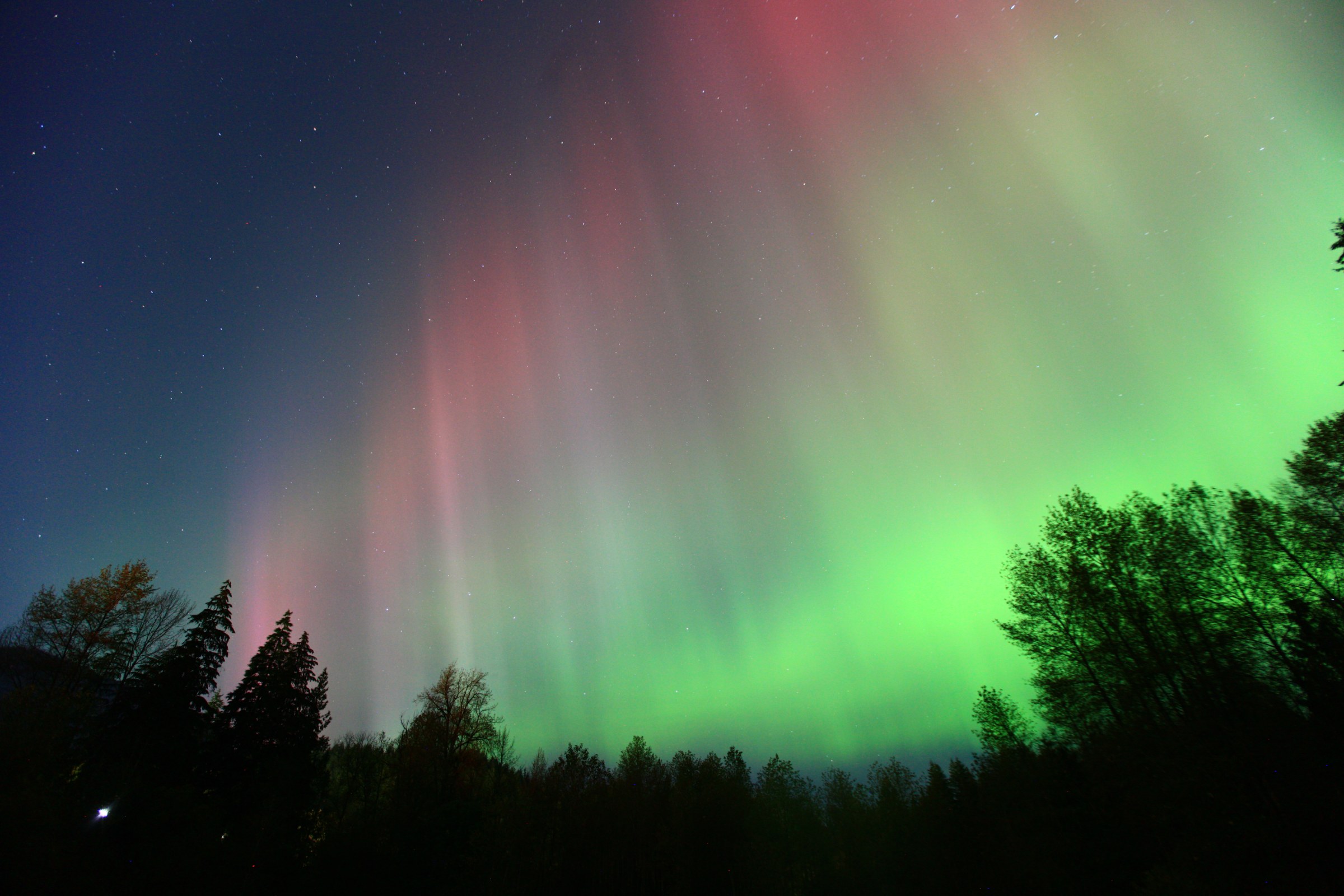
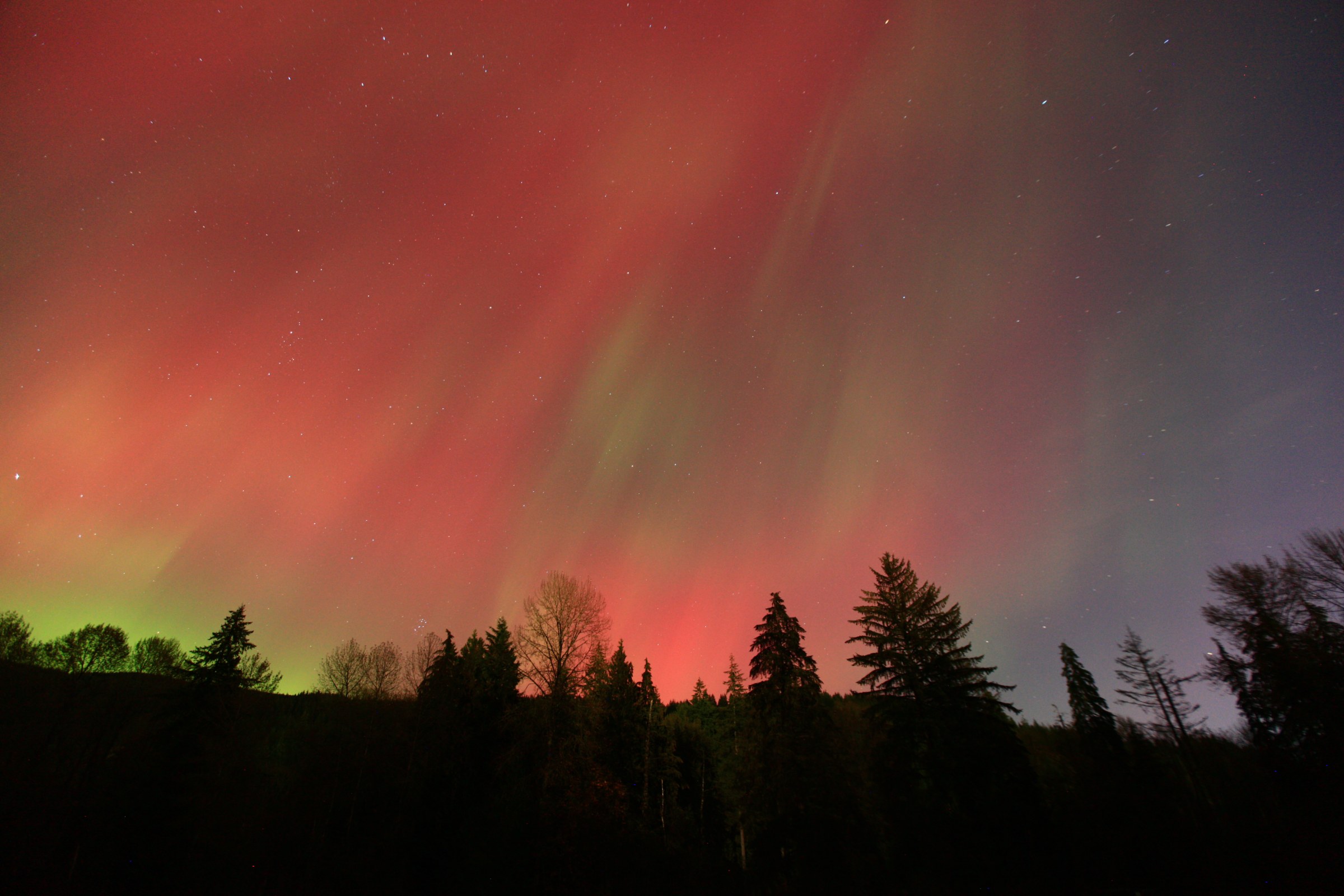
Not long ago, we in the Tri-Cities were lucky enough to witness one of nature's most spectacular displays: the Aurora Borealis. Shimmering curtains of green, purple, and vibrant red light danced across our local skies, created by solar particles colliding with Earth's atmosphere.
(PIC 06 - A display of red columns of Northern Light)
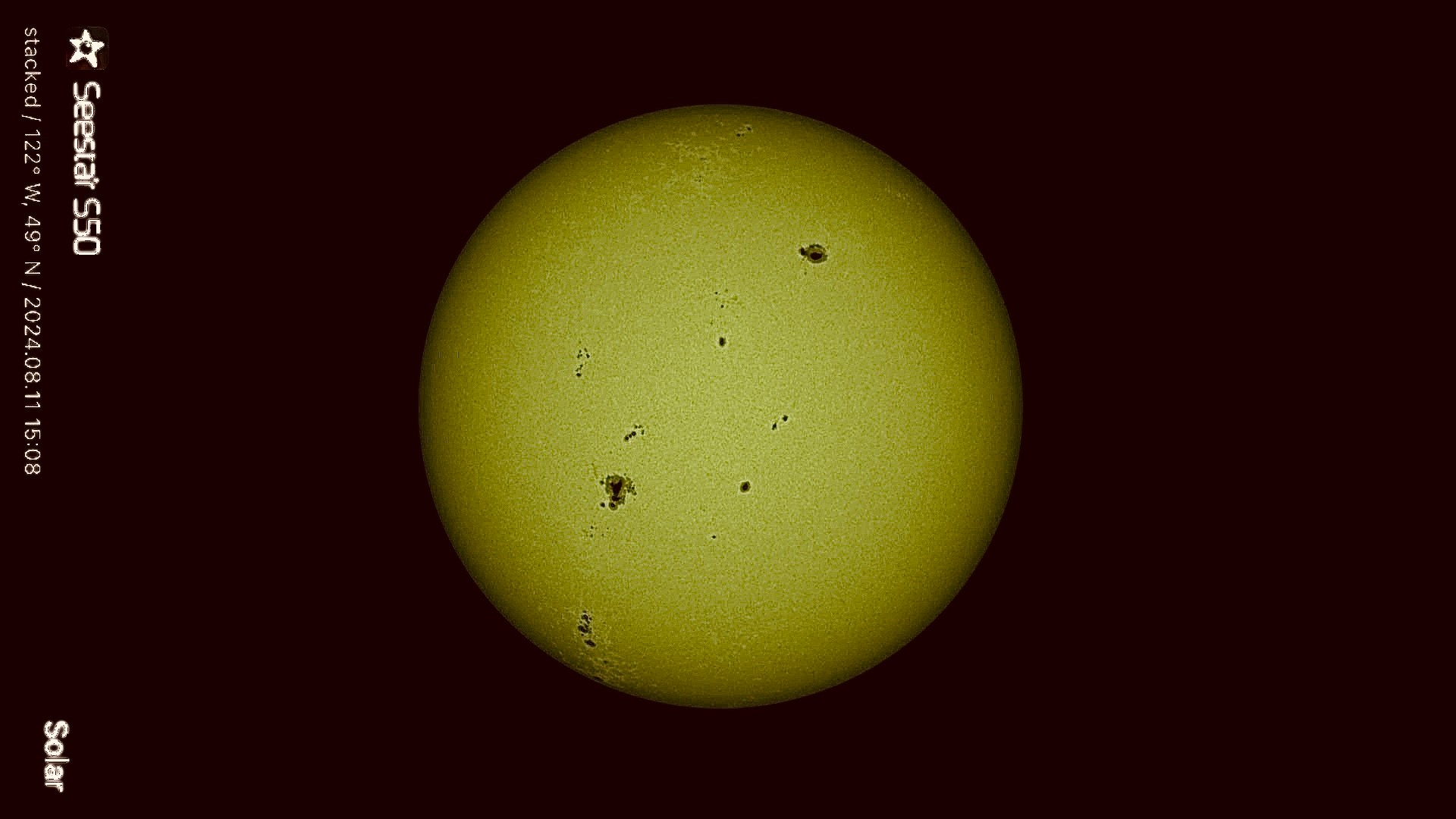
Also known as the Northern or Polar Lights, the display was clearly visible all the way from Rocky Point to Minnekhada Park in Port Coquitlam, stretching over Eagle Mountain and into Burquitlam. Escaping the worst of the city's light pollution offered a front-row seat to a unique spectacle of vibrant colours and dancing vertical rays—a rare treat that normally belongs to much higher latitudes. Hundreds of local night-sky enthusiasts turned it into a community event, gathering along Pipeline Road in Coquitlam and popping up in suburban pockets all across the Lower Mainland.
(PIC 07 - A solar observation reveal sunspots responsible for magnetic storm, capture with Smart Telescope SeeStar S50)
Best spot for stargazing
All around the Tri-Cities, you can find great stargazing conditions right from your own backyard or along quiet suburban streets. But for a truly memorable experience, parks on the edge of town are perfect. This is especially true if they have large parking lots, which offer a wide, open view of the sky and a solid surface to set up heavy tripods and telescopes. Of course, some spots are always better than others, and in my experience, isolated places work beautifully if you plan ahead. Because the dark can be a bit intimidating, it is always best to stick together. Astrophotographers often gather at the same popular spots, and asking to join a session is a fantastic idea—they are usually happy to share tips, gear advice, and their passion for the night sky.
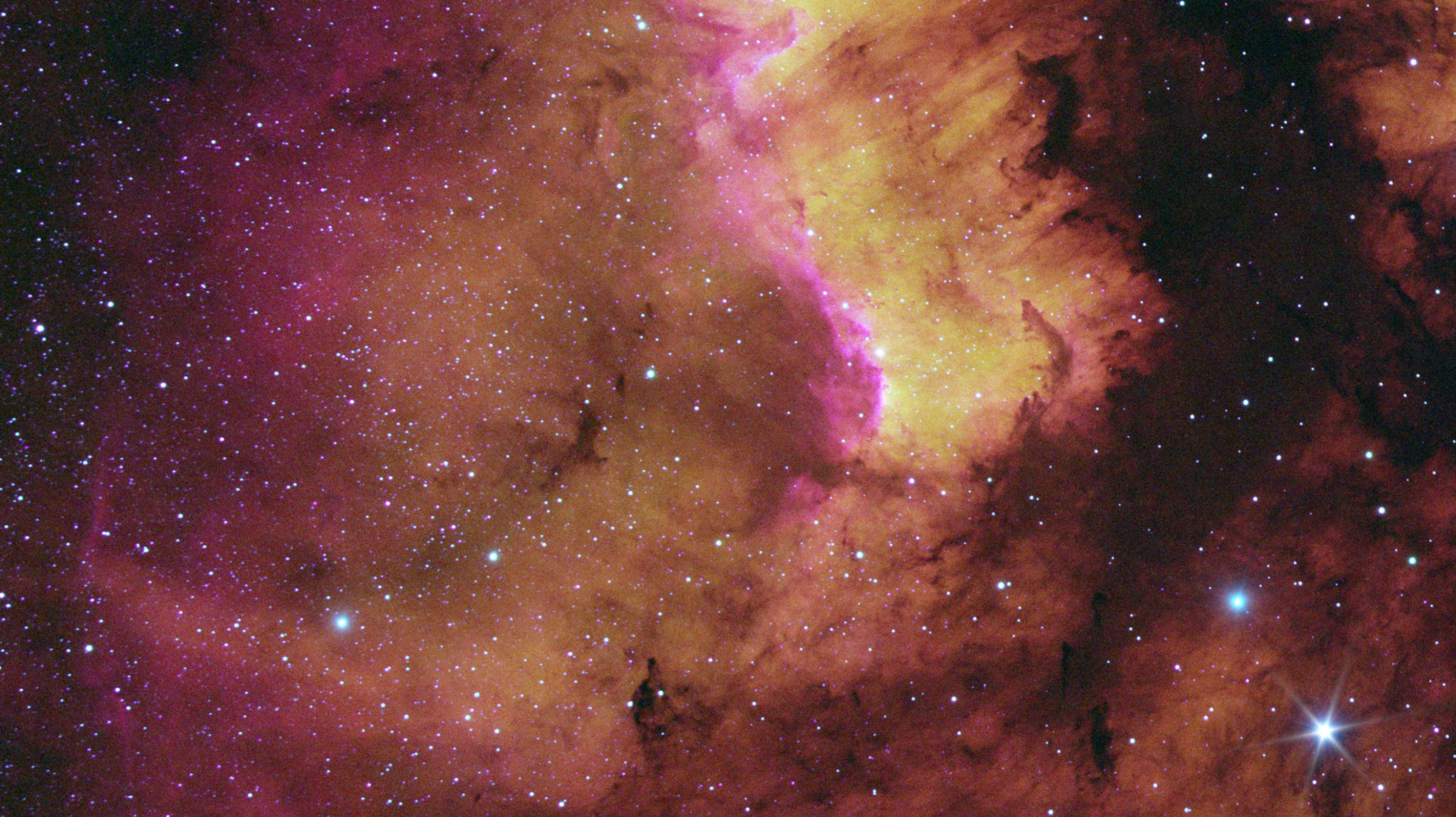
(PIC 08 - A stacked picture of North America Nebula )
Learning from seasoned pros can make all the difference for a beginner, saving you from a lot of trial and error. For instance, the image above shows just a tiny fraction of a massive nebula. It took hours of shooting—capturing individual exposures of one to three minutes over and over again—using special SHO filters (Sulphur, Hydrogen, and Oxygen) to bring out those vibrant, hidden colours before being blended together with open-source software. It is a labor of love that takes time, patience, and often multiple nights under the stars. Fortunately, new smart telescopes are changing the game. Using a dedicated app on your phone or tablet, these modern marvels can handle the stacking, clear out bad frames, and process a stunning final image for you.
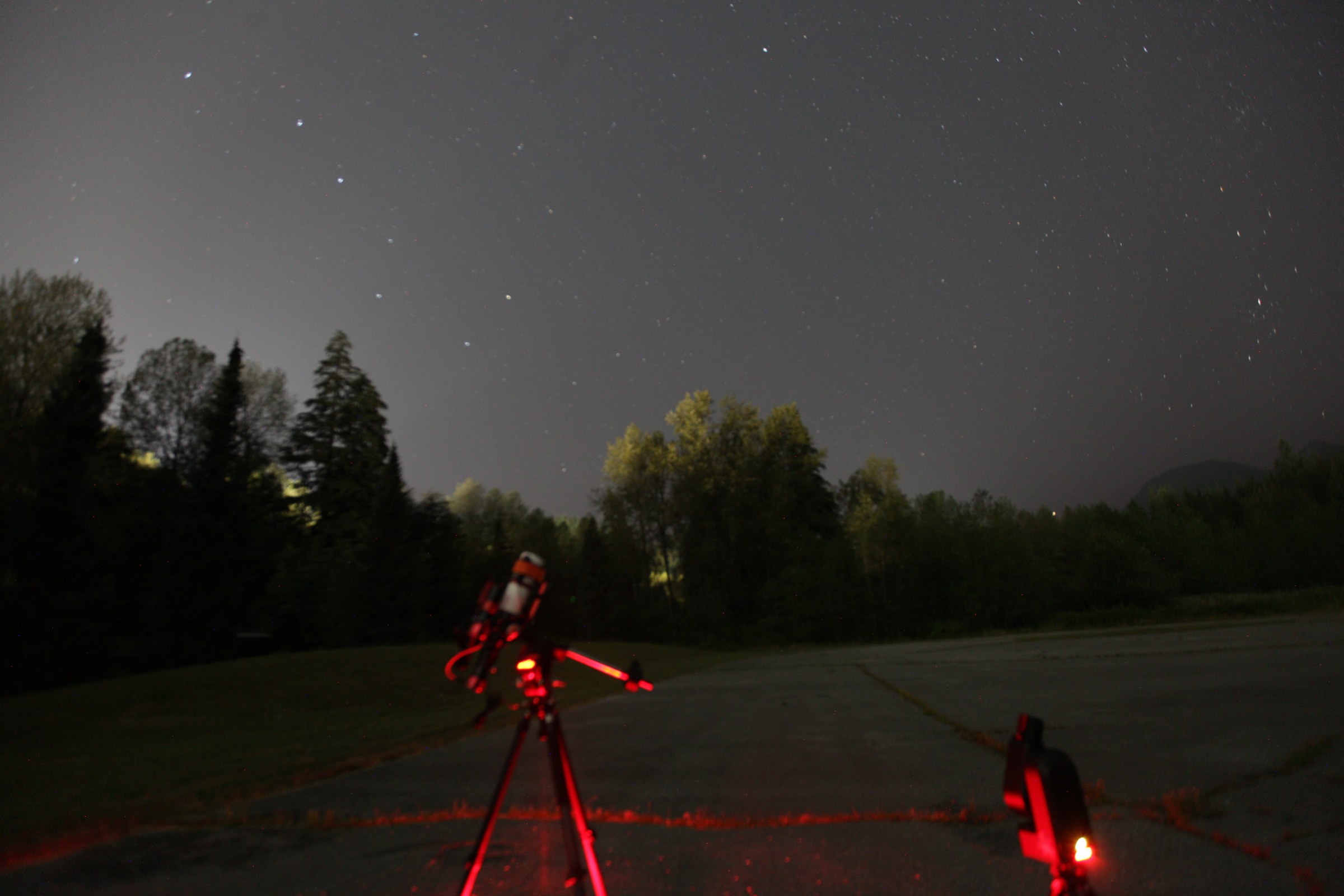
(PIC 09 - Telescopes placed at Upper Coquitlam River Park)
Tips from an Astrophotographer
Stargazing is an incredible adventure. If you are thinking of giving it a try, start by doing some basic research on binoculars, cameras, and telescopes. It is usually wise to buy used equipment first, upgrading your gear only as you master new skills. YouTube is packed with dedicated channels to help you learn the basics, and attending local events in person is a fantastic way to meet fellow night-sky enthusiasts. A great place to start is checking the SFU Trottier Observatory calendar for their public 'Starry Nights' events.
Try stargazing from the comfort of your backyard first. Once you feel confident operating your gear in total darkness, it is time to venture out to darker, more isolated spots. For excellent low light pollution, I highly recommend: Rannie Road heading up to Pitt Lake, Pipeline Road in Upper Coquitlam River Park, Ioco Road in Port Moody, near the Historical Ioco Townsite, Deboville Slough Dyke Trail in Port Coquitlam"
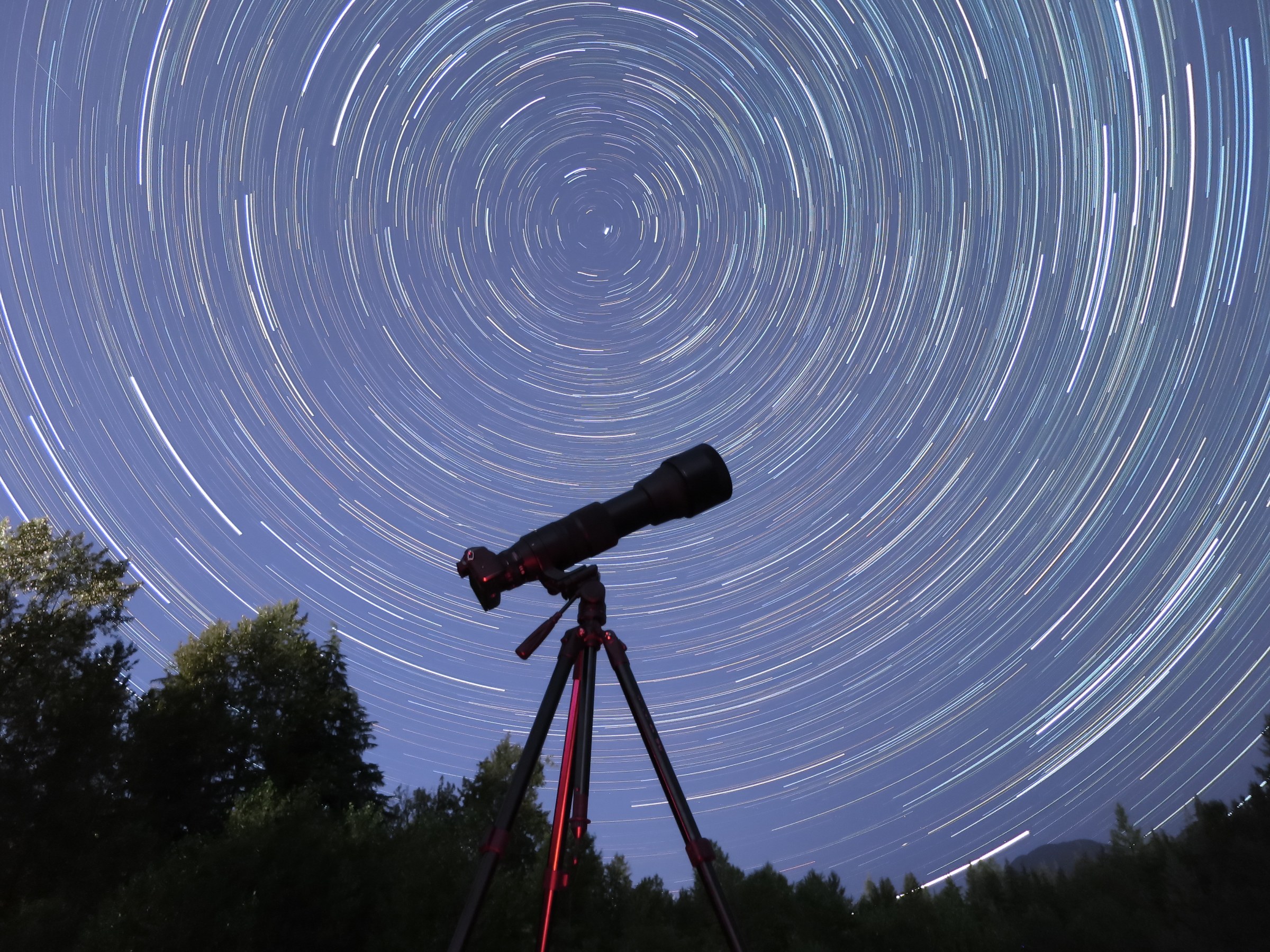
(PIC 10 - A Startrail of 90 minutes shot in Port Coquitlam using a simple compact Canon camera )
Be prepared to share the night with local wildlife. Many areas around the Tri-Cities are active corridors for bears, deer, cougars, raccoons, and other critters. The safety rules are exactly the same as they are during the day: stay calm, never run, maintain a safe distance, and always carry bear spray.
Honestly, in over ten years of stargazing year-round, I have never had a serious issue with wildlife. In fact, catching a glimpse of these animals usually enhances the whole outdoor experience. Only once did I have to temporarily surrender my telescope and cameras for an 'inspection' by an overly curious black bear on Pipeline Road. I slowly backed away and waited safely inside my car. After ten minutes, the bear wandered off, and I went right back to my spot. It was an amazing moment and just another great story to tell from my night adventures.
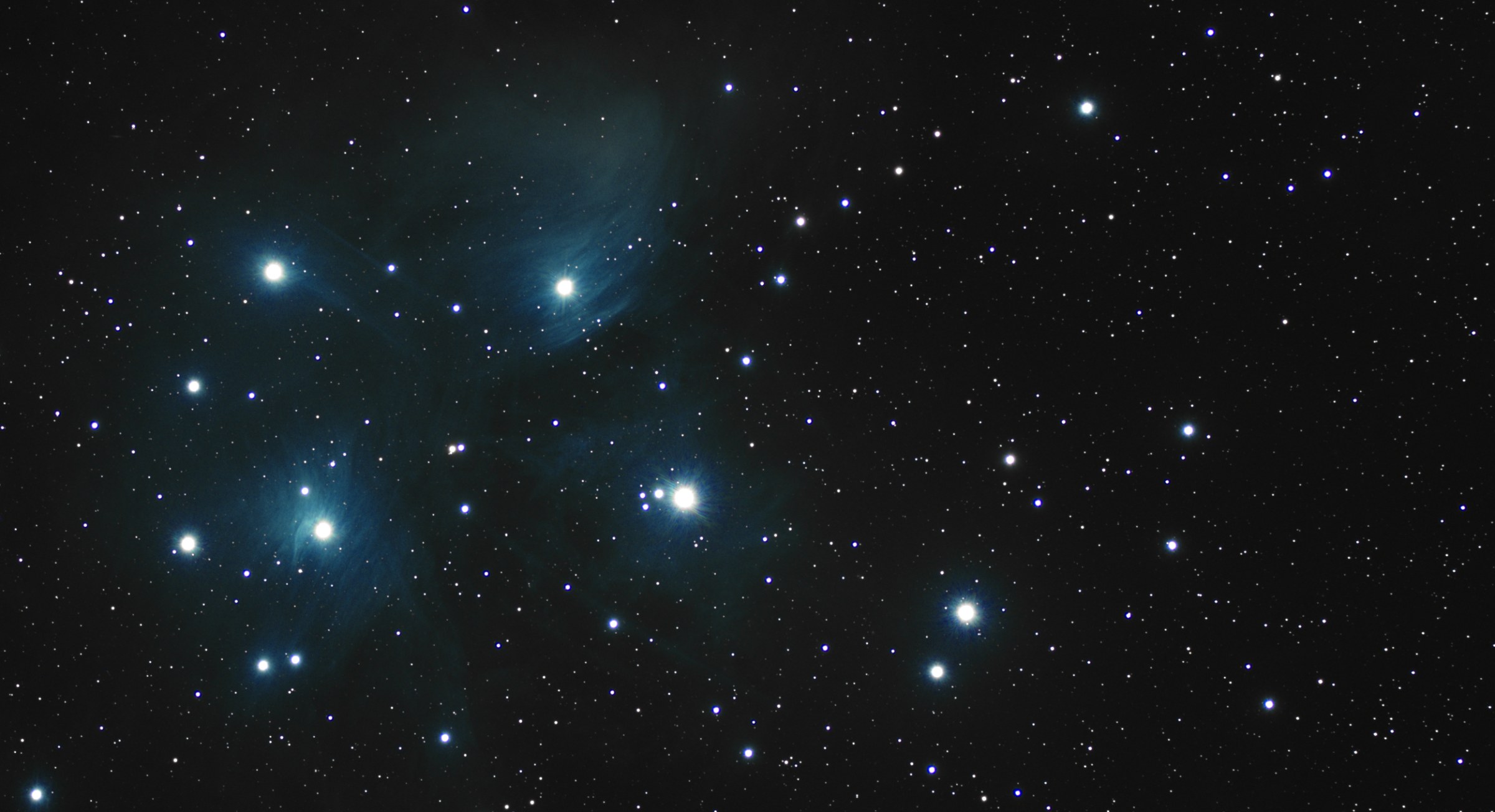
Photo Gallery
Loading comments…