
The First Time
Years ago, I accidentally purchased a Hoya R720 infrared filter. At the time, I had no idea that this simple mistake would completely revolutionize how I view photography.
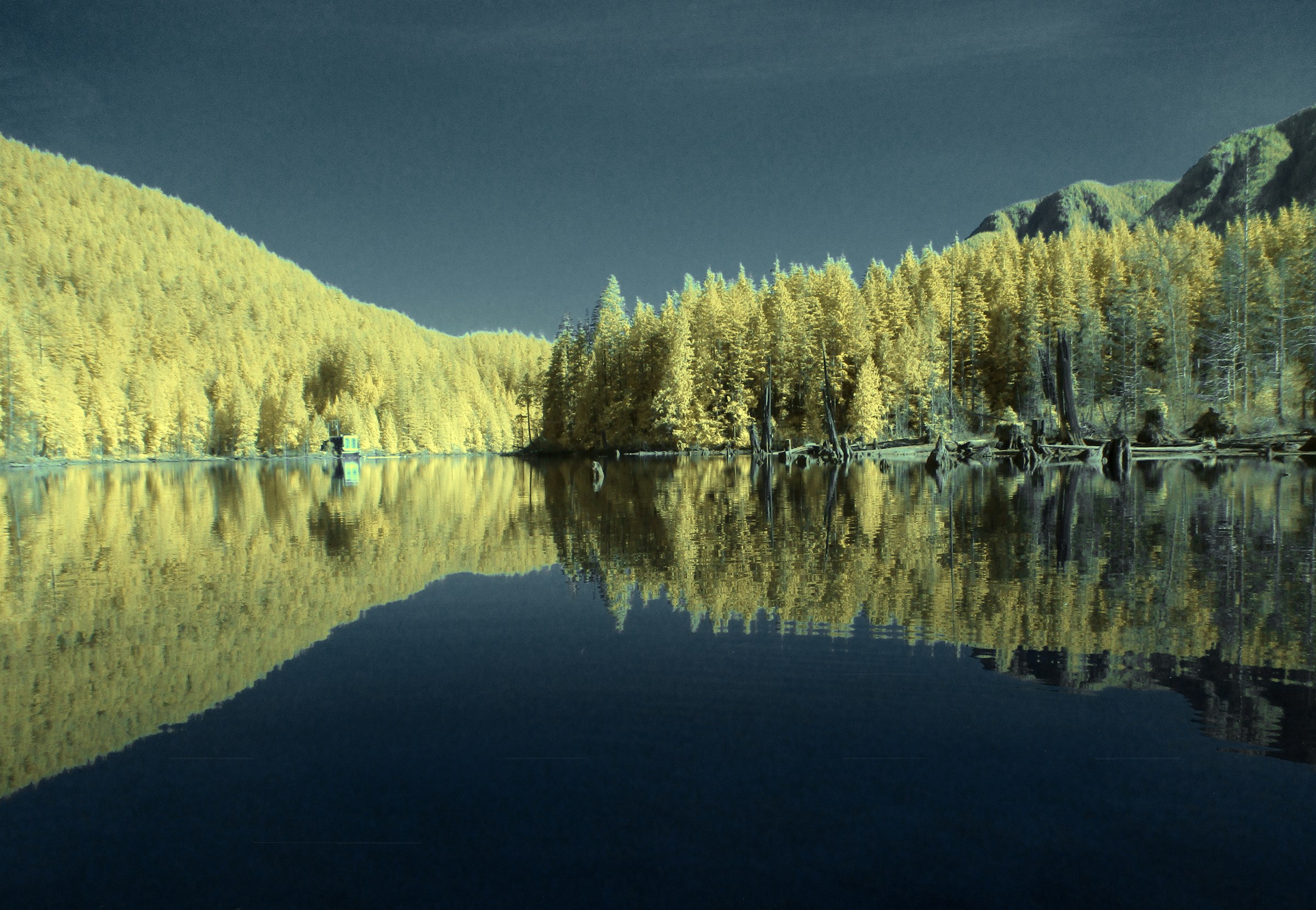
Once I realized that an infrared filter operates entirely differently from a standard Neutral Density (ND) filter, my curiosity was piqued. After a quick research session on infrared light emissions, I mounted my Canon EOS camera onto a tripod and framed a nearby landscape. [1]
My first attempt yielded nothing but a pitch-black screen, despite a shutter speed of several seconds. Undeterred, I gradually increased the exposure time to five, ten, and then fifteen seconds. That is when the magic happened.
The resulting image resembled a traditional black-and-white landscape, but with a surreal twist: the trees, plants, and grass had transformed into a bright, glowing, magnificent white. This phenomenon, known as the Wood Effect, instantly captivated me.
After just a few frames, I recognized the immense artistic potential of infrared photography. It allows a photographer to transform an otherwise mundane landscape into a fine-art masterpiece. The striking contrast between deep shadows and glowing highlights, combined with the ethereal appearance of the foliage, effortlessly turns a lush summer scene into a hauntingly beautiful winter wonderland.
The Challenge
Modifying an EOS camera to fully unleash its infrared potential requires a profound act of technical bravery, forcing you to completely dismantle the complex camera body to access its most delicate component: the image sensor. Built directly into every standard camera is an internal hot mirror—an IR-UV cut filter permanently seated in front of the sensor to deliberately block invisible light and ensure images match human vision. To capture the pure near-infrared spectrum, this glass barrier must be meticulously removed and replaced with either clear glass or a dedicated infrared filter.
Naturally, undertaking this precision micro-surgery at home carries extreme risk, and my first conversion attempt ended in absolute disaster. During the delicate reassembly phase, I made just a few critical errors—seemingly minor missteps that were nonetheless fatal enough to permanently destroy a premium, full-frame DSLR.
Refusing to let that failure end my journey, my second attempt proved to be a triumphant success. Having learned from my initial mistakes, I practiced on another used EOS full-frame body purchased specifically for this experimental purpose. Once the restrictive internal hot mirror was successfully extracted, the camera's true capabilities were unlocked, and my exposure times plummeted instantly. Because the sensor was no longer starved for infrared light, the long, multi-second exposures that previously demanded a heavy tripod became completely unnecessary.
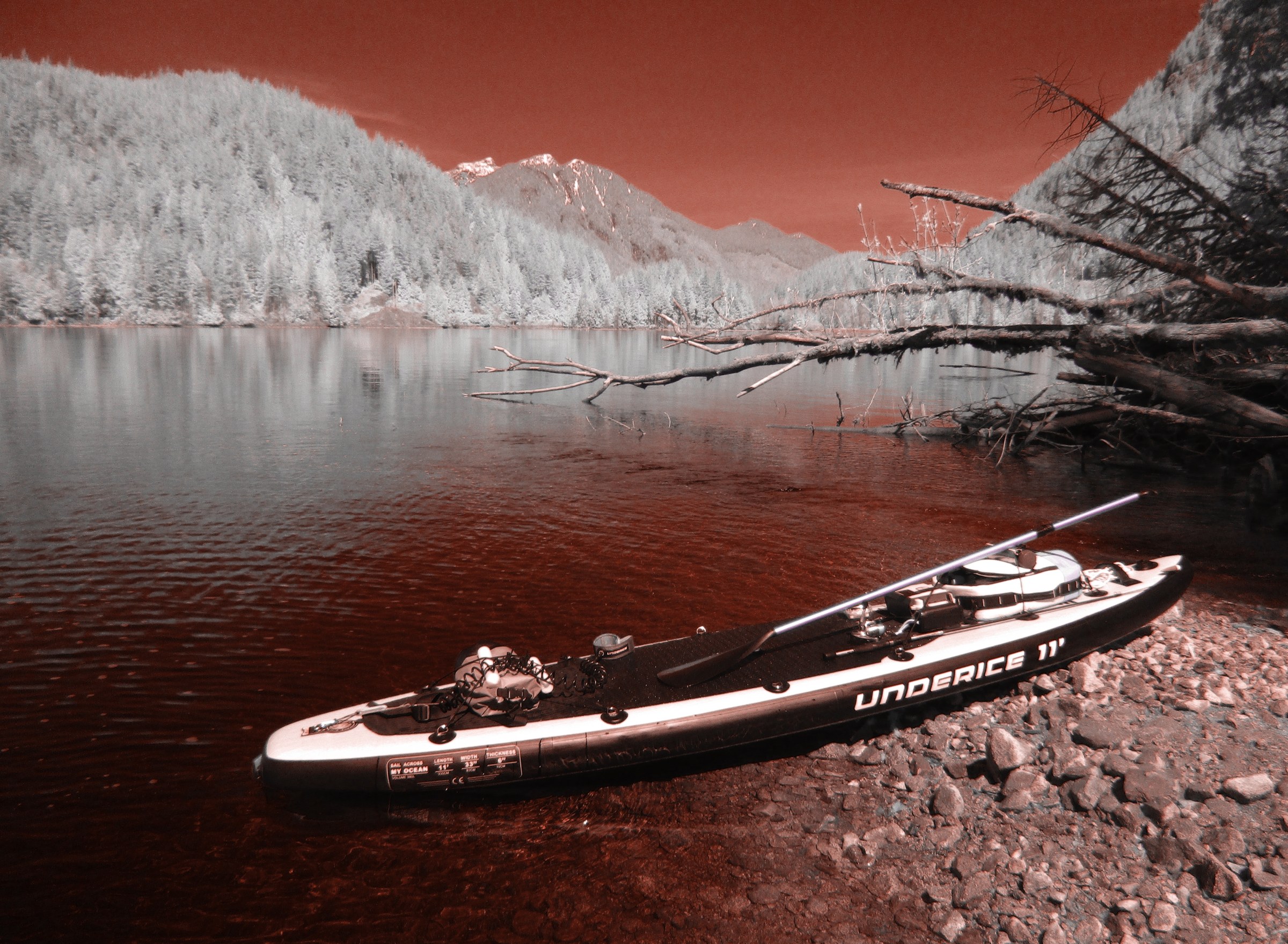
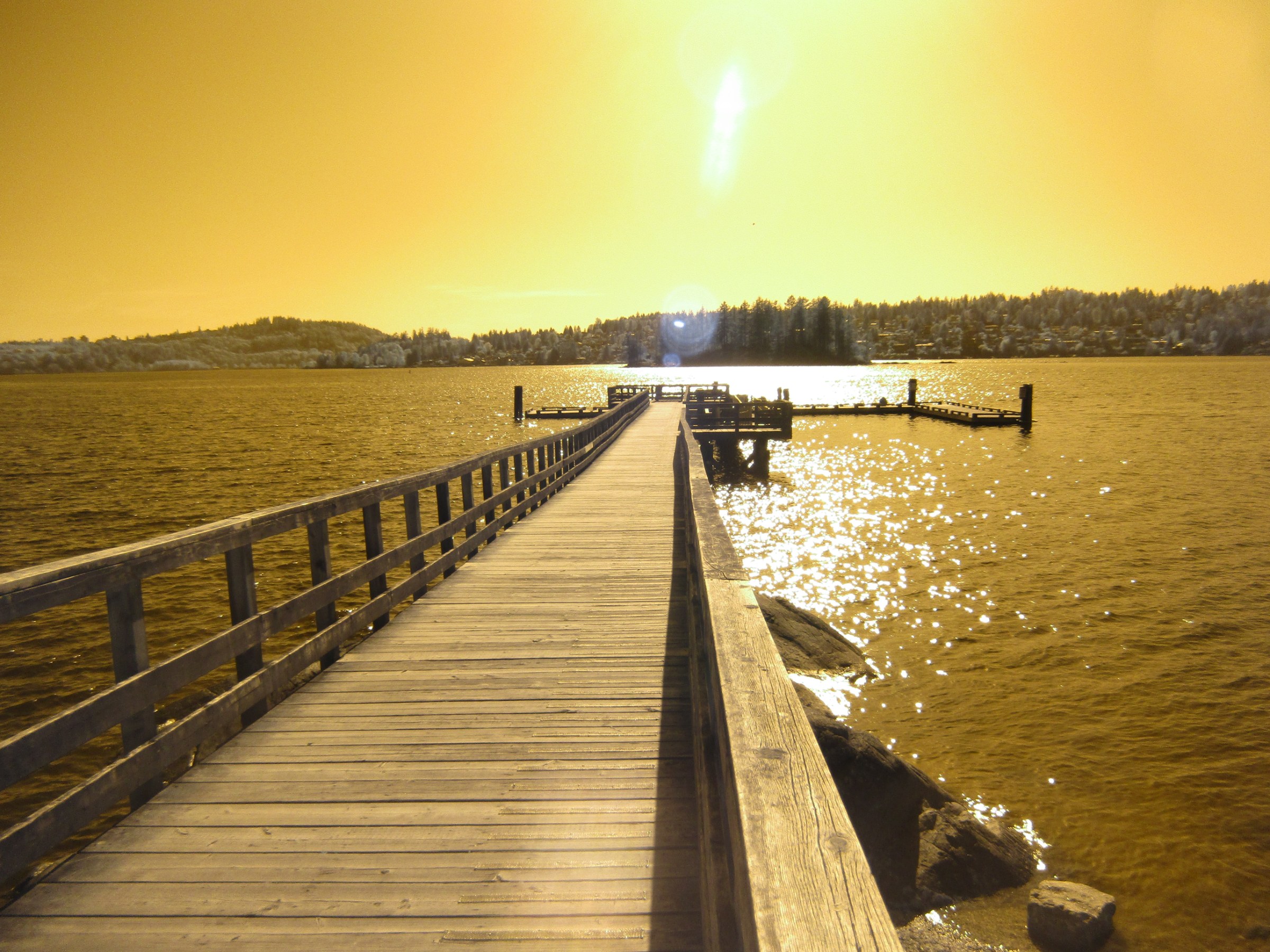
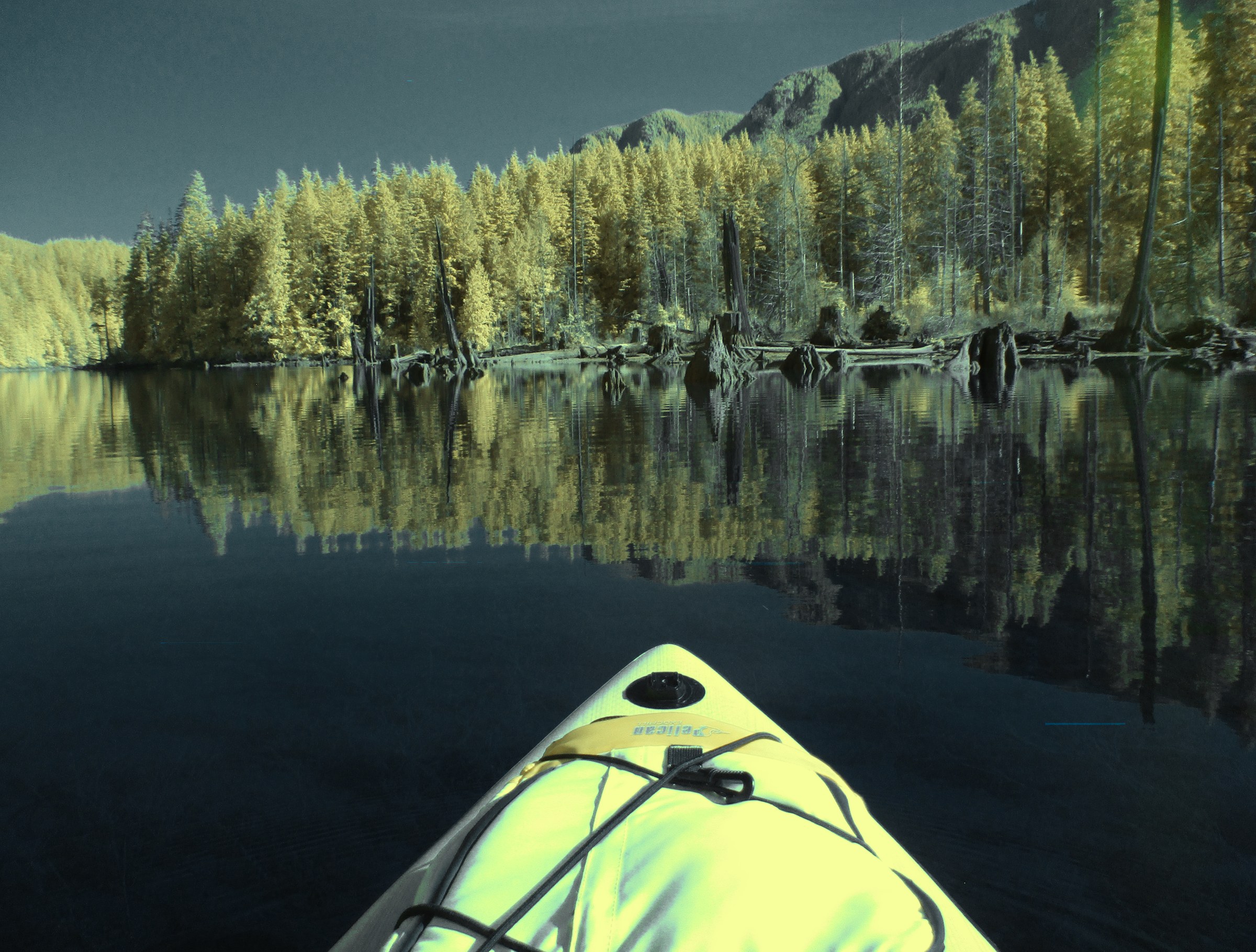
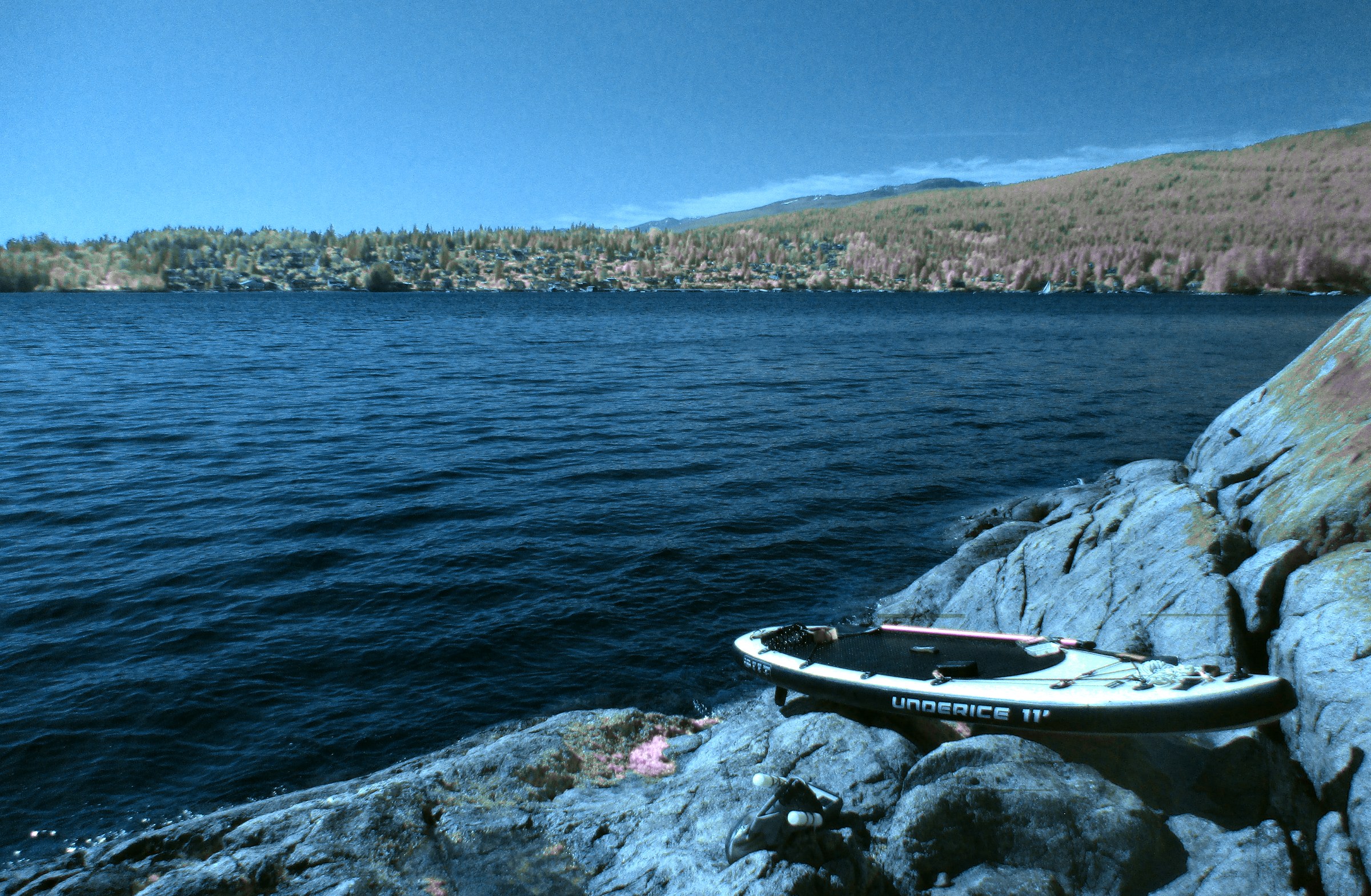
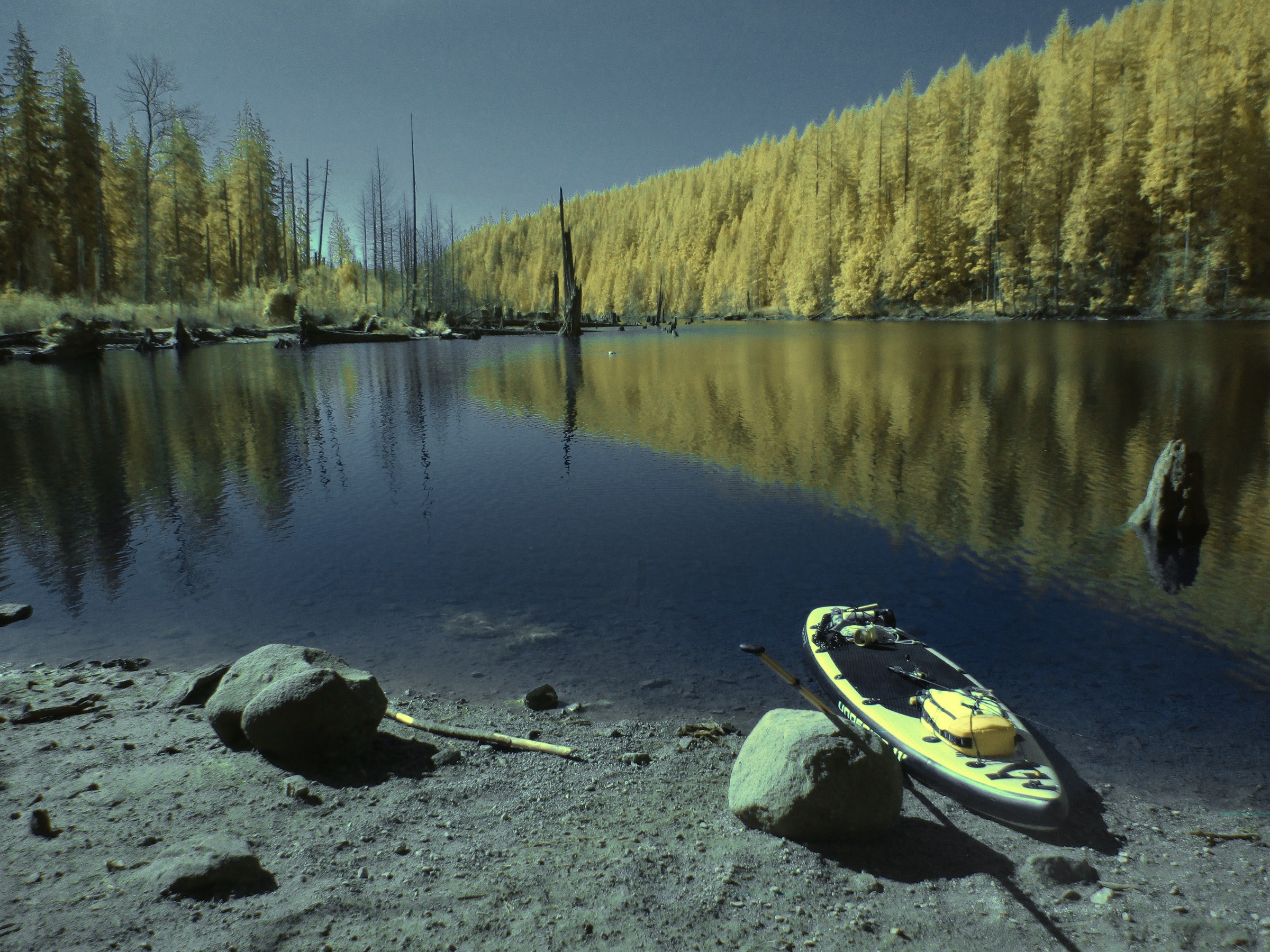
This breakthrough liberated my shooting style entirely. I could suddenly drop my shutter speeds to 1/500th of a second or faster, enabling me to freeze moving subjects and capture the invisible world in real-time, completely handheld. Ultimately, this newfound photographic freedom allowed me to take my gear into previously impossible environments. I was finally set free to carry my converted camera onto a paddleboard or a kayak, shooting directly from the water’s surface to blend the surreal, glowing white foliage of the shoreline with the dark, glassy, and dramatic mirror reflections of the water below.
Understanding the Science: What is Infrared Light?
To understand why a natural landscape transforms so radically under infrared light compared to ordinary light, we must first look at the basic concepts of visible and invisible radiation.
The Limits of Human Vision
Human eyes can only perceive a tiny fraction of the electromagnetic spectrum, a narrow band of wavelengths known as visible light. This band contains all the colors of the rainbow, spanning from violet to red. Standard photography relies entirely on this visible light to recreate the world exactly as our eyes see it.
Just beyond the red end of this spectrum lies an invisible world of light known as infrared (IR) radiation. While our eyes cannot naturally detect it, we can modify camera sensors and utilize specialized filters to block out visible light entirely. This allows the camera to record an otherwise hidden environment.
The Electromagnetic Spectrum: A Breakdown
The electromagnetic spectrum categorizes light by its wavelength, which is measured in nanometers (nm).
Visible Light Range: Human vision spans from approximately 400 nm (violet) to 700 nm (deep red).
Infrared Light Range: Broadly speaking, infrared radiation spans from 700 nm up to 1 millimeter.
Photographic Infrared Range: Cameras cannot capture the entire infrared spectrum. Photographic processes utilize Near-Infrared (NIR) light, which sits immediately adjacent to visible light between 700 nm and 1200 nm. This is entirely distinct from thermal infrared (3,000 nm to 14,000 nm), which measures heat signatures.
Why Landscapes Transform So Radically
The dramatic transformation of a landscape boils down to how organic materials interact with Near-Infrared wavelengths.
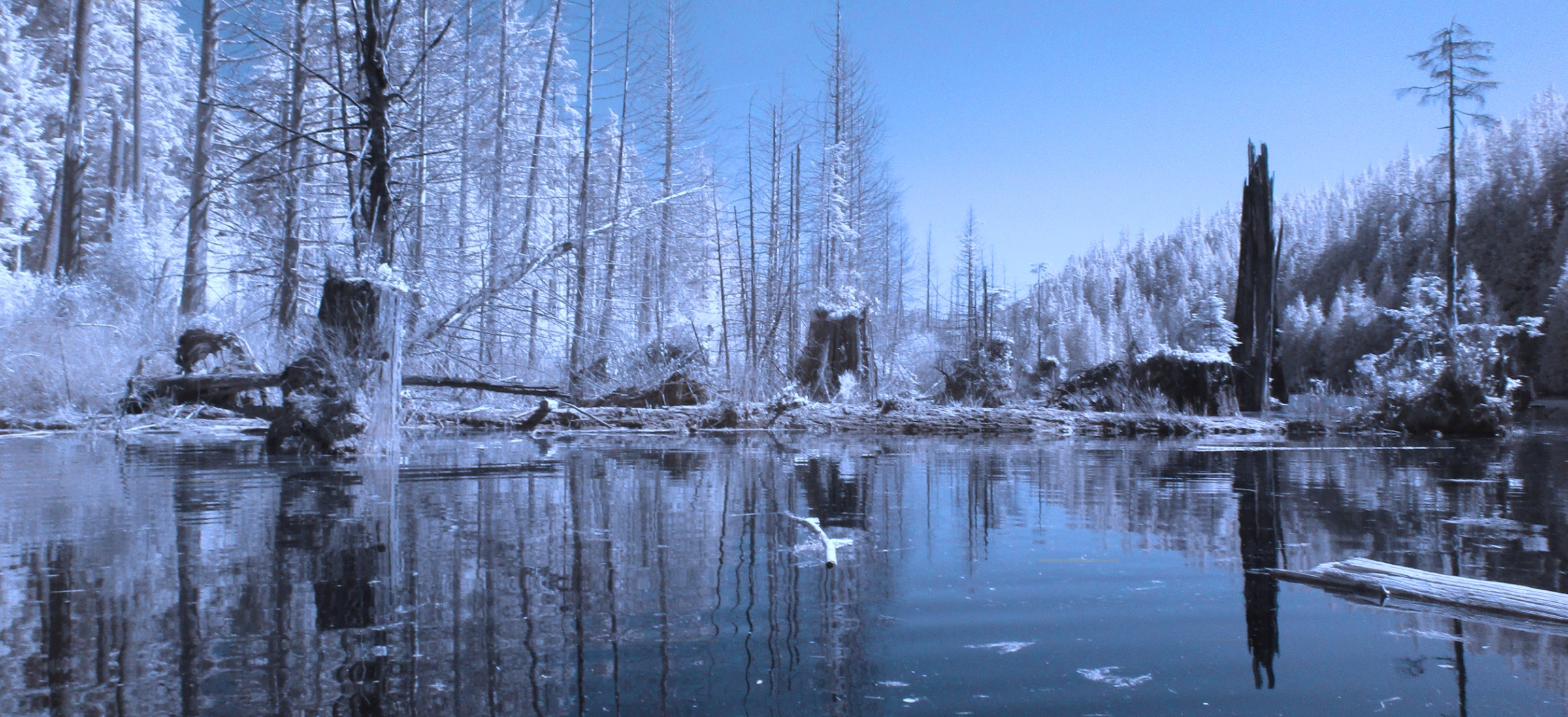
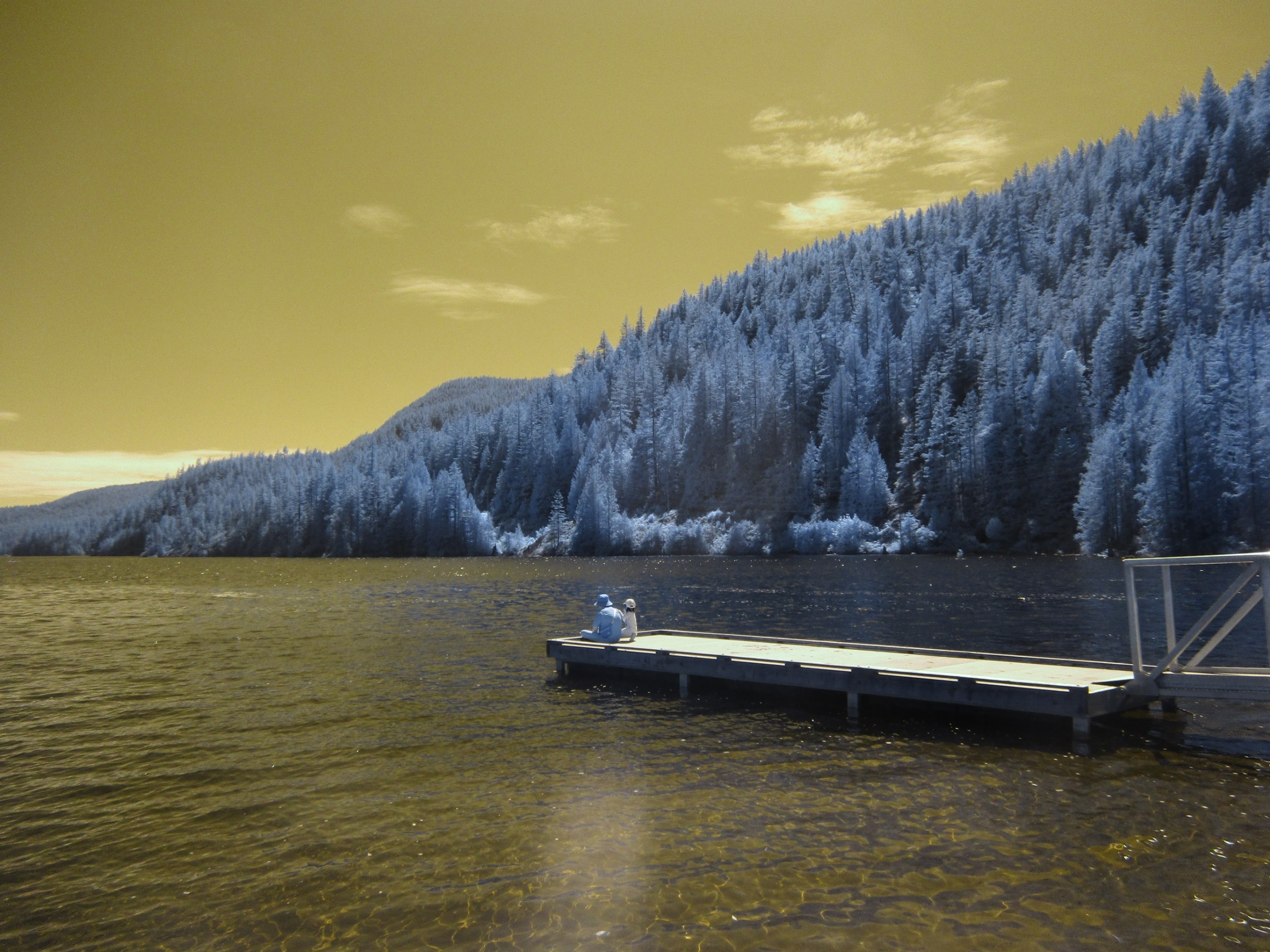
In visible light, plants look green because chlorophyll absorbs blue and red light for photosynthesis while reflecting green light. However, chlorophyll does not absorb Near-Infrared light. Instead, the internal cellular structure of living leaves acts like a tiny mirror, reflecting up to 70% of incoming NIR light to prevent the plant from overheating. This intense reflection is what causes green foliage, grass, and trees to glow a stark, brilliant white on camera.
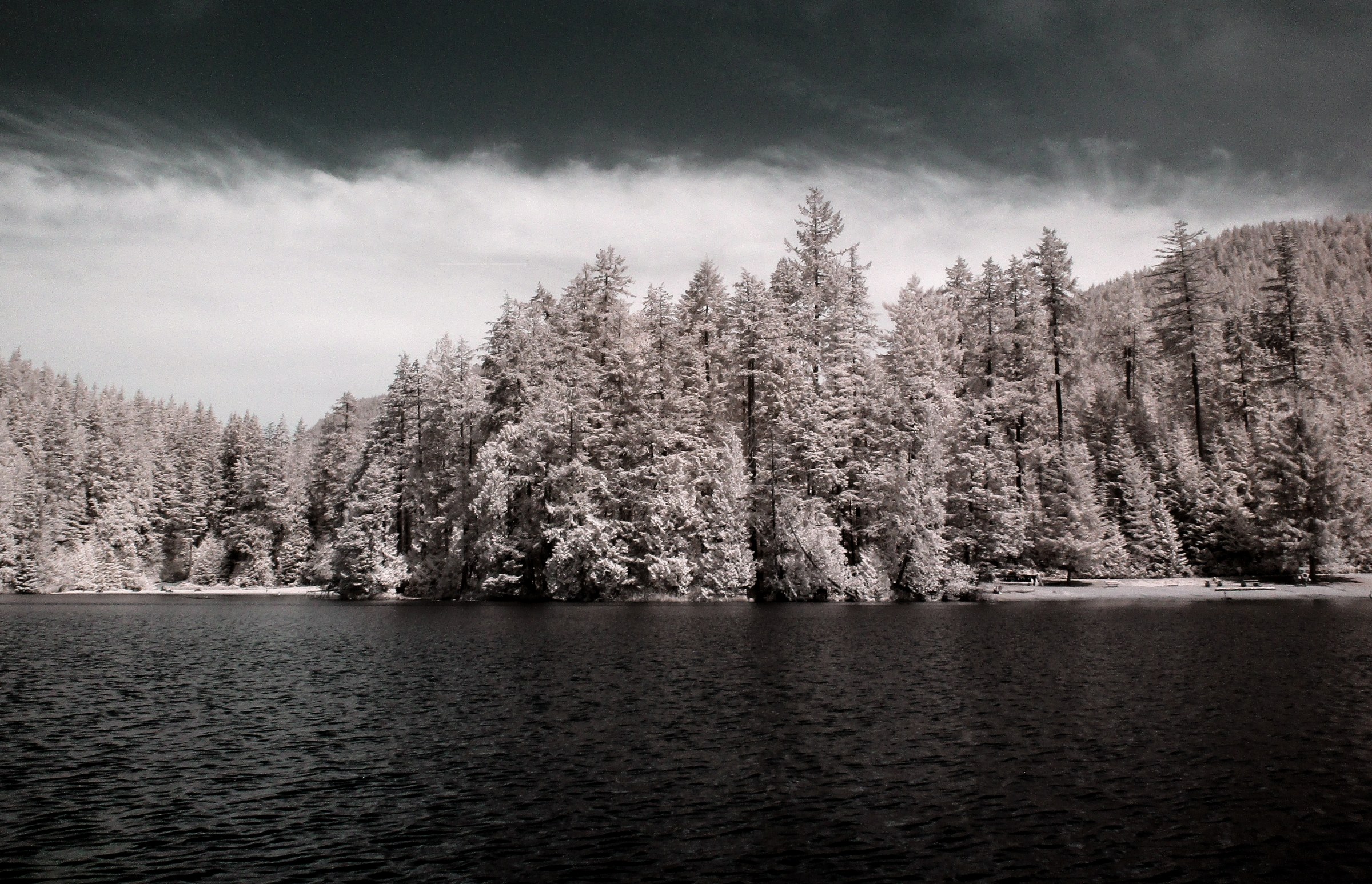
Conversely, water and clear blue skies absorb Near-Infrared light almost completely. Because no light is reflected back to the sensor, the sky and water turn deep, dramatic shades of charcoal or jet black.
By selecting a specific filter—such as a 590 nm, 720 nm, or 850 nm filter—you dictate exactly how much light enters the camera. Stronger filters block all visible light for pure black-and-white contrast, while milder filters allow a fraction of deep red visible light to pass through. This introduces partial, surreal colors to the image, turning ordinary, everyday landscapes into dreamlike, ethereal masterpieces.
The Artistic Impact of the Invisible
Looking through an infrared lens completely rewrites the rules of visual storytelling. By stepping outside the bounds of human vision, a photographer can harness a unique aesthetic that carries profound psychological and creative weight.
The Surreal Aesthetic: The Wood Effect
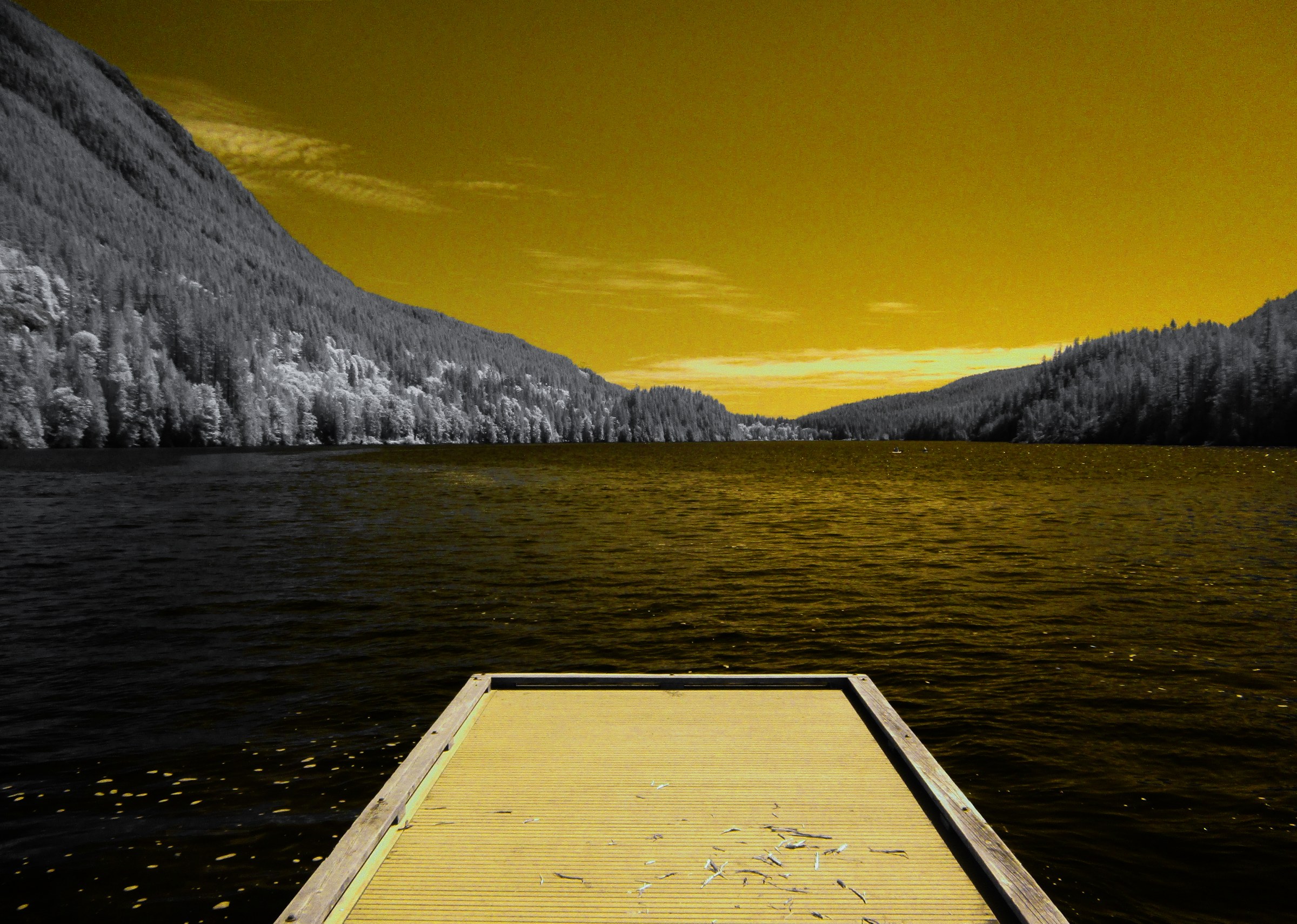
The radical transformation of an infrared landscape relies on three distinct visual elements: Snow-White Foliage (Living leaves, trees, and grass glow with a luminous, snow-like brilliance) This signature glow turns a sweltering mid-summer afternoon into a surreal winter scene; Monochromatic Skies Because blue skies and bodies of water absorb near-infrared light instead of reflecting it, they turn an inky jet-black or deep charcoal; Extreme Contrast The juxtaposition of blazing white foliage against a pitch-black sky creates a dramatic, high-contrast graphic style that is physically impossible to capture using visible light.
Emotional and Psychological Impact
Infrared photography does not just change how a photo looks; it deeply alters how a photo feels: Ethereal Moods The glowing textures and soft, dreamlike light wrap scenes in an otherworldly, fairy-tale, or ghostly atmosphere; Timelessness Stripping away realistic colors disconnects the image from a specific era or moment. The final results often resemble vintage 19th-century pictorialist paintings; Haunting Solitude By distorting familiar environments, infrared turns busy, everyday landscapes into quiet, alien worlds. This evokes a powerful sense of peaceful isolation and calm mystery.
Creative Choice: Monochrome vs. False Color
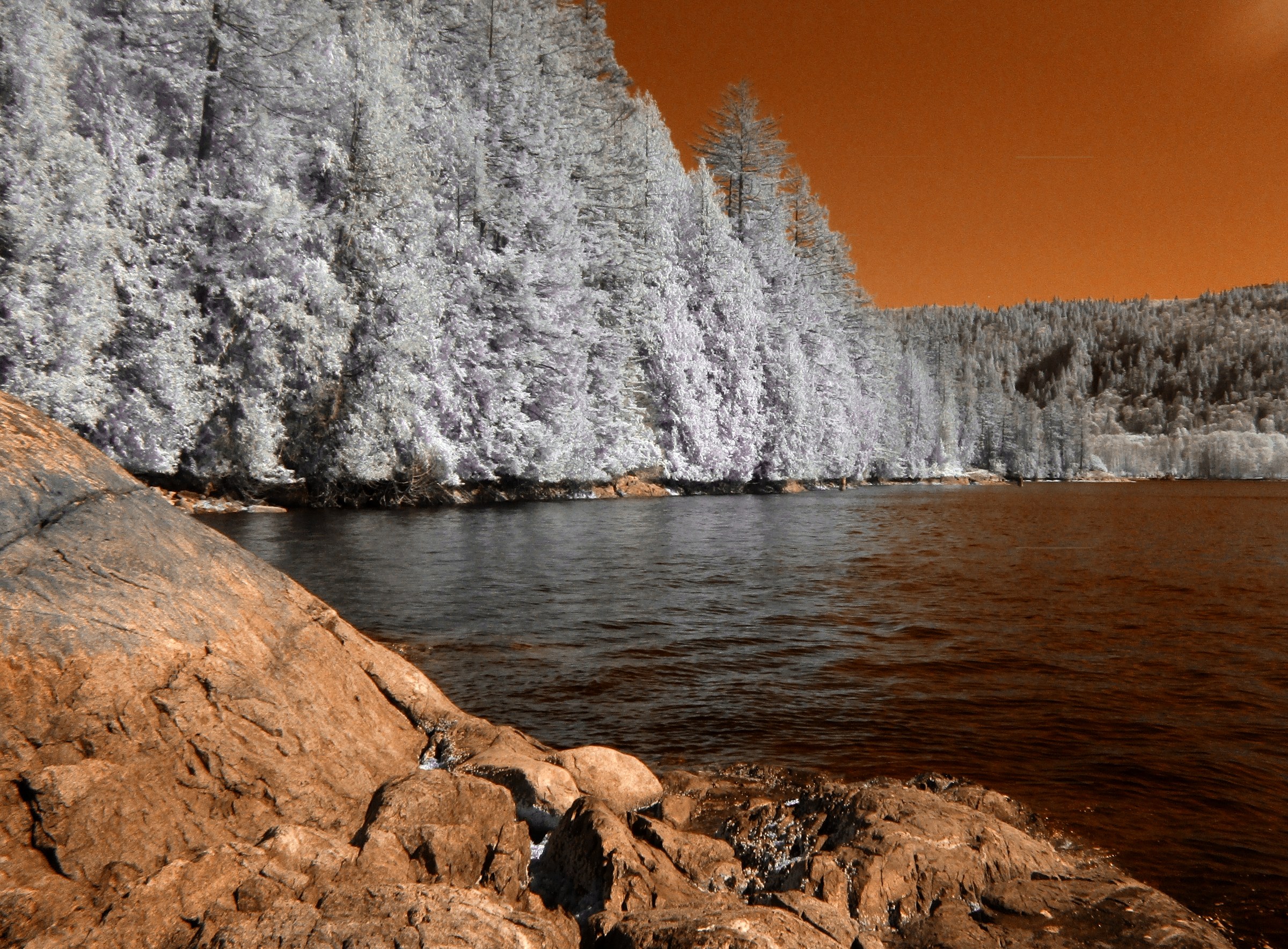
An artist can completely alter the narrative of an image based on the specific infrared wavelength they choose to capture: Deep Monochrome (830nm) This wavelength blocks out all visible light. It strips away every color distraction to focus purely on graphic lines, deep shadows, and raw, gritty textures for pure black-and-white fine art; False Color (590nm–720nm) These shorter filters allow a small amount of deep red visible light to blend with the infrared wavelengths. By swapping the red and blue color channels in post-processing, photographers can create vibrant, candy-colored blue skies contrasted against brilliant crimson or golden trees.
A Shift in the Photographer's Mindset
Ultimately, the true magic of infrared photography lies in how it disrupts the photographer’s visual routine, requiring a complete rewiring of how an artist interacts with light, time, and composition. Photographers are traditionally trained to seek out the vibrant hues of the "golden hour" and avoid the harsh, flat light of a midday sun. Infrared flips this mentality completely; a bright afternoon sun becomes the absolute best time to shoot because it provides the maximum amount of infrared radiation. This forces you to unlearn color instincts, ignore the actual hues of a scene, and focus strictly on invisible reflectivity. Over time, you develop a mental "second sight," learning to translate a green park into a glowing, snowy landscape and a blue sky into a black backdrop before ever pressing the shutter. This shift away from color harmony forces you to emphasize form and texture, prioritizing structural elements, bold geometric shapes, and stark silhouettes.
Furthermore, infrared photography introduces unpredictable elements that break down rigid, perfectionist mindsets, encouraging a playful, highly experimental attitude during both the shooting and digital editing phases. Documenting a world invisible to the human eye restores a sense of childlike curiosity, bringing back the pure joy of discovery by revealing the hidden layers of nature that everyday life conceals. Because the process requires specialized filters, careful pre-visualization, and modified equipment, it naturally rejects a fast-paced "point-and-shoot" mentality. It demands a mindful slowing down, fostering a meditative, deliberate approach that connects you deeply to your surroundings and turns the ordinary act of picture-taking into a true journey of artistic discovery.
Photo Gallery
Loading comments…